Your equipment can make a big difference when it comes to playing ball. While baseball and softball have many similarities, like pitching, hitting, and fielding, one of the most noticeable differences is the gloves players use.
Although both gloves are designed to protect the hands and help catch the ball, substantial differences make them specific to each sport. Let’s examine the differences between softball and baseball gloves and why these variations matter.
1. Size Matters: Softball vs. Baseball
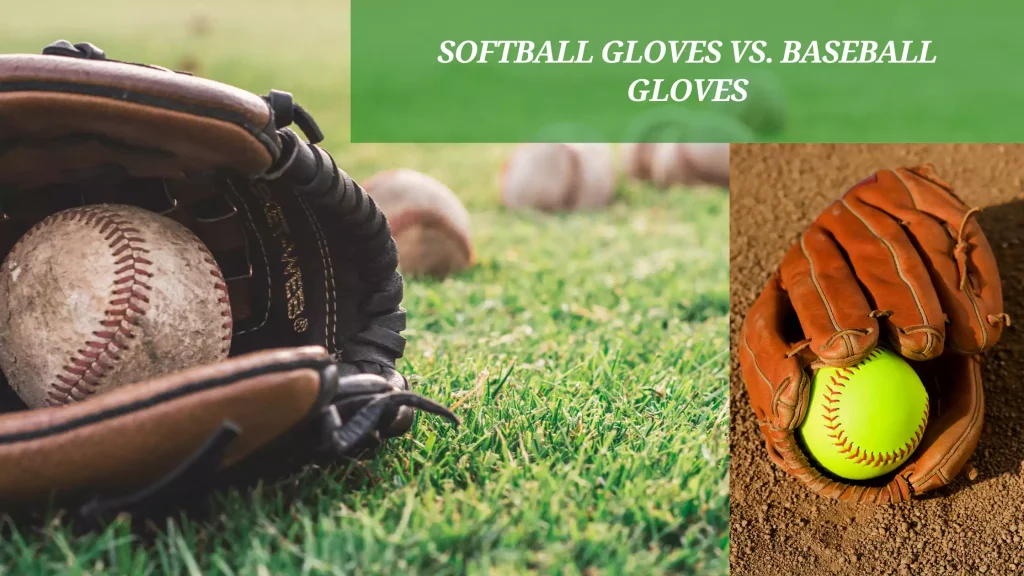
The biggest difference between softball and baseball gloves is the size of the balls used in each sport. Baseballs are typically 9 inches in circumference (about 23 cm), while softballs are larger, measuring around 11 and 12 inches (about 28 to 30 cm). Because the softball is bigger, the glove must be larger to catch it. As a result, softball gloves are usually longer than baseball gloves.
Softball gloves typically range from 11.5 to 13 inches, while baseball gloves are usually between 10.5 and 12.5 inches. This size difference also affects the glove’s design, with softball gloves generally having a deeper pocket to fit the larger ball.
2. Glove Design: Pocket and Webbing
Glove size is important, but the glove’s design also plays a big role. Here are some key design differences:
- Pocket Depth: Softball gloves usually have deeper pockets to help catch and hold the larger ball. Baseball gloves, especially those for infielders, tend to have shallower pockets for quicker transfers during double plays or fast throws to first base.
- Webbing: The webbing in the gloves also differs. Softball gloves typically have more open webbing, making catching and releasing the ball easier. On the other hand, baseball gloves often have tighter webbing, especially for infielders who need a firmer grip on the ball.
- Catcher’s Mitt: One of the most noticeable differences is in the catcher’s mitt. While softball and baseball catcher’s mitts have deep pockets to handle fast pitches, softball mitts tend to be larger and more oval-shaped. Softball catcher’s mitts usually range from 32 to 35 inches, while baseball mitts are typically between 31 and 35 inches. The larger size of a softball catcher’s mitt helps accommodate the bigger ball.
3. Position-Specific Variations
Gloves are designed not only for the sport but also for specific positions on the field. Here’s how the design of gloves can change based on the position:
- Infield Gloves: In softball and baseball, infield gloves are smaller and have shallow pockets for quick transfers and throws. However, softball infield gloves are usually at least 11.75 inches or longer, while baseball infield gloves can be as small as 11 inches due to the size difference between the balls.
- Outfield Gloves: Outfield gloves are generally longer in both sports. Softball outfield gloves typically range from 12 to 13 inches, while baseball outfield gloves are usually around 12.5 inches. Both types have deep pockets to catch fly balls, but the length can vary slightly because of the larger size of the softball.
- First Base Mitts: First base mitts are similar in both sports, typically ranging from 12.75 to 13 inches. However, softball first base mitts often have a wider pocket to handle the larger softball more effectively.
4. Fit and Comfort
Comfort and fit are important when choosing the right glove. Both softball and baseball gloves are designed with adjustments to ensure the best fit for the player:
- Baseball Gloves: Baseball gloves come in different wrist fits to suit various hand shapes and sizes. Some models, like Rawlings’ ContoUR fit, have slimmer finger stalls and smaller wrist openings for players with smaller hands. Most gloves also have adjustable wrist straps to fit different hand sizes.
- Softball Gloves: Softball gloves are often made to fit a wider range of hand sizes. Since women and girls may have different hand and wrist sizes, many softball gloves include adjustable pull straps at the wrist for a custom fit. This flexibility helps players get a snug, comfortable feel, especially since softball gloves tend to be longer with deeper pockets.
5. Materials and Durability
Baseball and softball gloves are usually made from high-quality, like full-grain leather, but the durability and break-in process differ. Softball gloves may need to break in faster because they have larger pockets and deeper structures. This requires more flexing and softening of the leather to reach its full potential.
In baseball, gloves tend to break in more flexibly, especially for infield gloves, where quick responses are needed. Softball gloves, however, are designed to be sturdier to handle the larger ball and the frequent catches required in the sport.
Conclusion
Both baseball and softball gloves are designed to protect your hands and help you catch the ball, but key differences in size, pocket depth, webbing, and design for specific positions affect how each glove performs.
Whether you’re playing softball or baseball, it’s important to choose a glove made for your sport to ensure comfort, performance, and durability throughout the season. So, next time you step onto the field, make sure your glove fits your game and your skills.